
The Proposed Roundabout at the Intersection
of Shippan Ave./Magee Ave/Harbor Drive
A revived, State-funded opportunity
The City of Stamford has recently raised again the opportunity to replace the existing four-way intersection at the corner of Shippan Ave., Harbor Dr., and Magee Ave. with a roundabout.
As the elected representatives of District 1 on the Stamford Board of Representatives, we believe it is important to keep our community members properly informed on issues concerning the quality of life and safety of our neighborhoods, so let’s dive a little deeper into the subject of roundabouts:
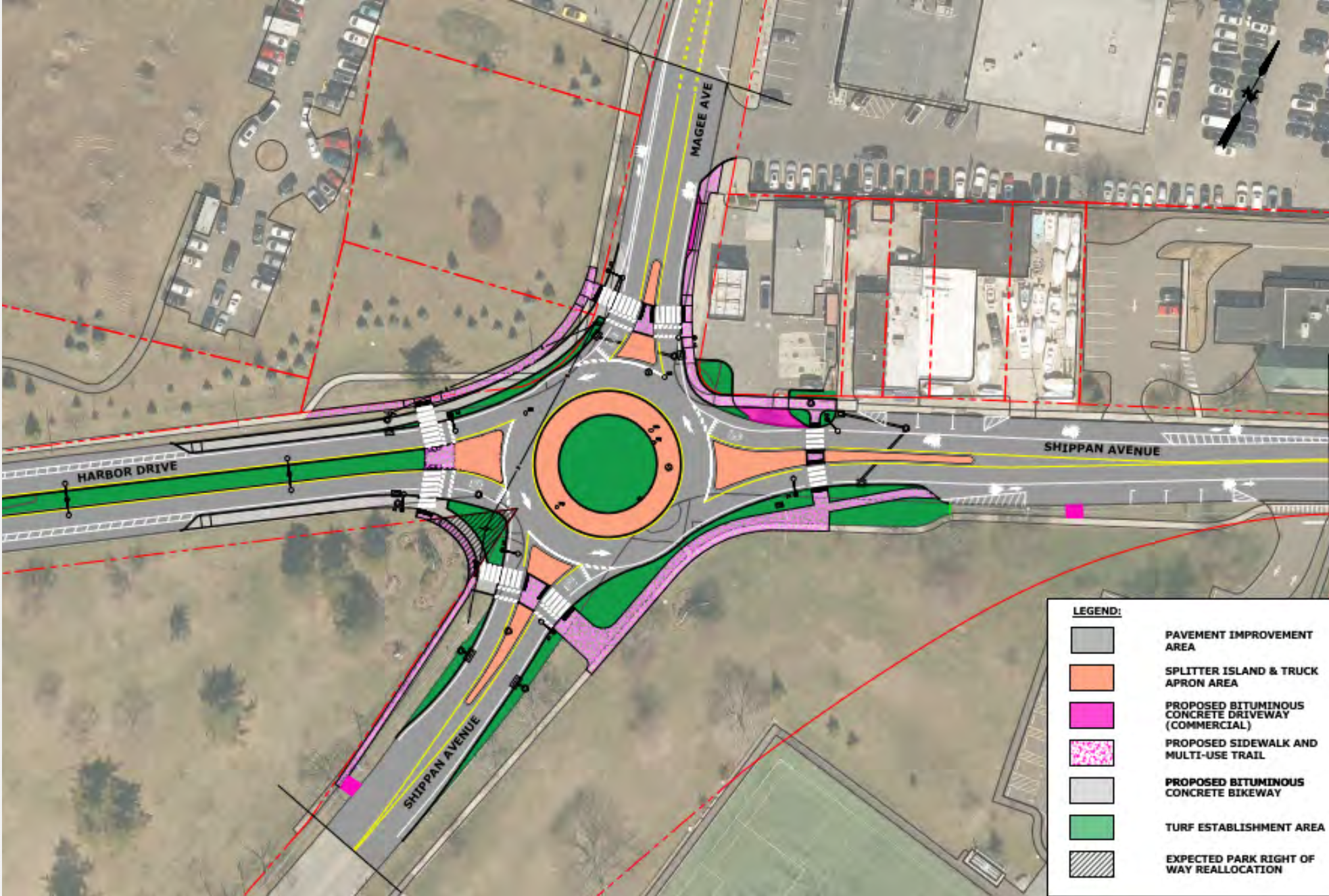
Preliminary rendering of the Shippan Ave./Magee Ave./Harbor Drive roundabout.
Stamford Coastal Resilience Plan
The frequent flooding of the intersection during weather events was identified as a critical vulnerability for the Shippan neighborhood. The implementation of the resilience plan will involve replacing and upgrading the existing stormwater drainage with larger pipes, back flow valves, and retention basins. With or without a roundabout, these upgrades will require significant excavation in and around the intersection.
The following contains material generated by a Federal study of roundabouts, the New York State Department of Transportation, and the Ohio Department of Transportation. In the last decade, the State of Ohio has installed 76 roundabouts with plans for at least 25 more:
What is a roundabout?
A roundabout is a circular intersection where traffic flows in one direction around a central island. Vehicles entering the roundabout must yield to traffic already circulating.
Roundabouts promote a continuous flow of traffic, reducing the need for vehicles to come to a complete stop. This results in smoother traffic movement, decreased congestion, and shorter travel times.
Why are roundabouts beneficial?
Roundabouts improve safety by reducing the severity of accidents and minimizing the risk of T-bone or head-on collisions, which are common at traditional intersections with traffic signals or stop signs.
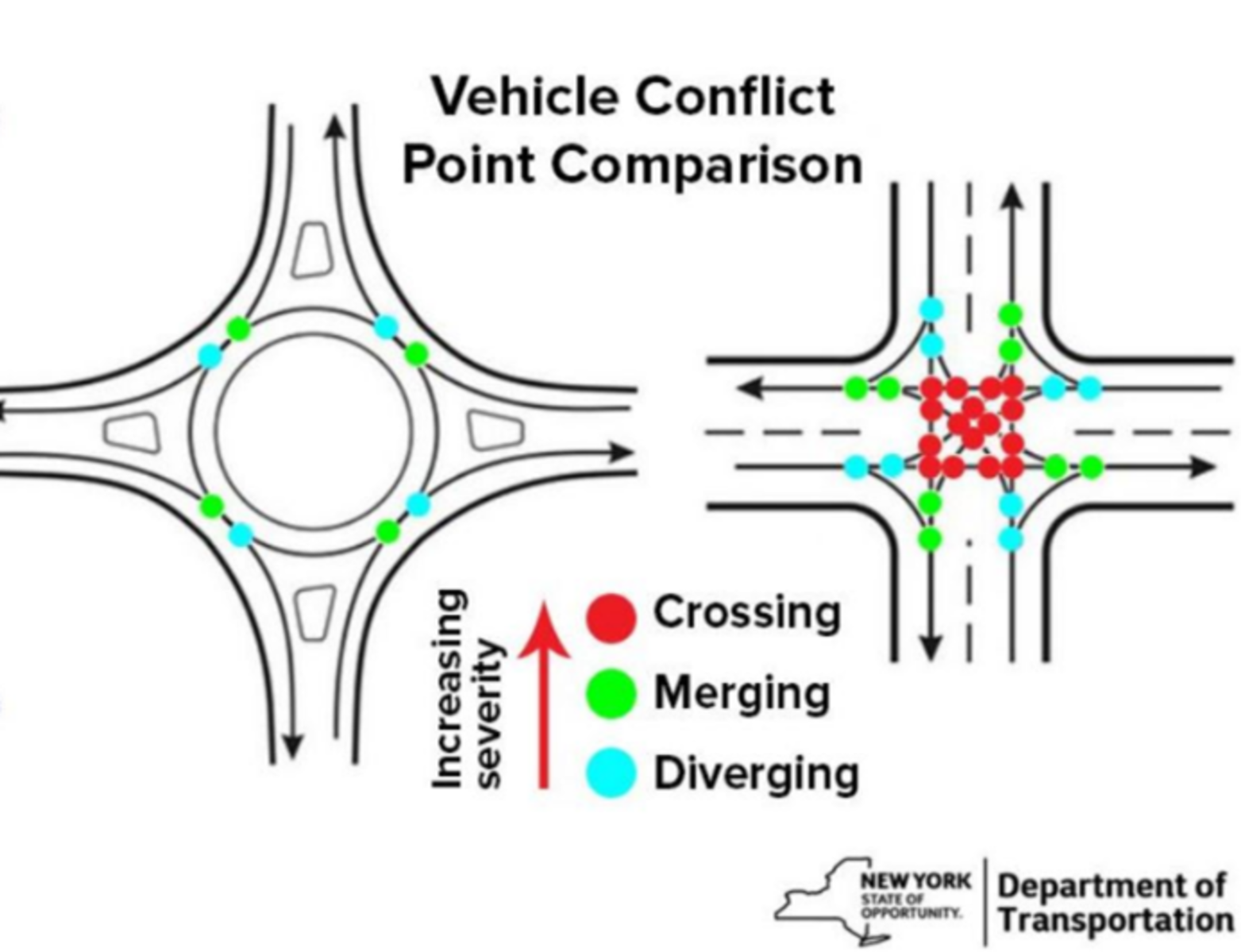
Unlike traditional intersections, which have 32 conflict points, roundabouts only have 8 (seen in the adjacent figure). They also simplify drivers' decision-making by requiring them to focus on looking in only one direction to enter traffic.
Roundabouts are also safer because they allow pedestrians to cross one lane of traffic at a time. The pedestrian crosswalks for roundabouts are located away from the circular vehicle traffic, and median islands allow pedestrians to negotiate through traffic coming from one direction at a time.
Are there roundabouts nearby that I can drive through?
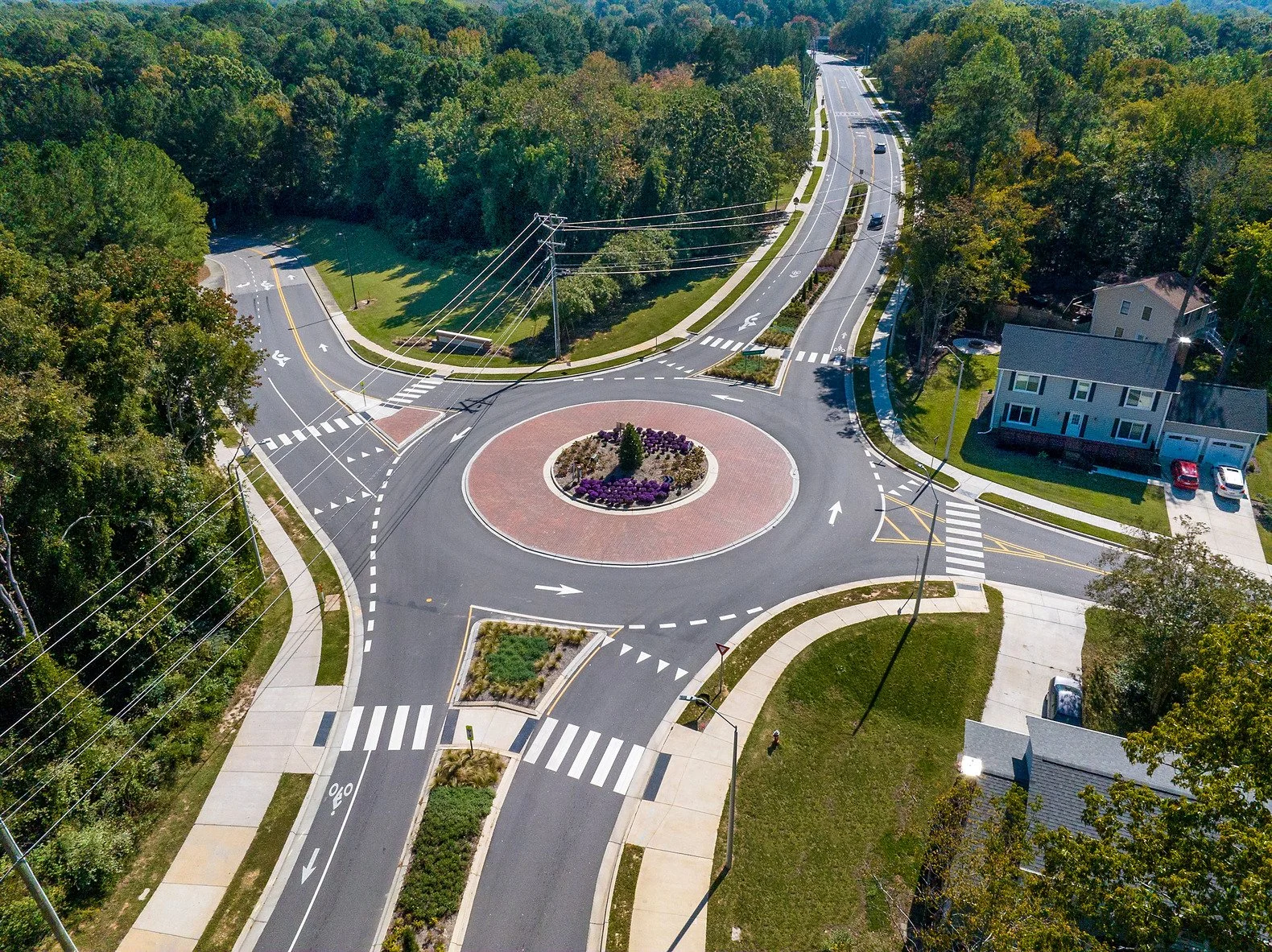
Yes. There are two recently completed roundabouts in Stamford. One at the intersection of West Ave. and Stillwater Ave. and the more recently completed roundabout at the intersection of Greenwich Ave. and Pulaski Street.
Newly completed Pulaski St./Greenwich Ave. roundabout,
How do semi-trucks or large fire equipment navigate the roundabout?
One way this is accomplished is with truck aprons - an area between the central island and the traveled way that is mountable by larger vehicles but not used by passenger vehicles. The video at right shows how the truck apron works.
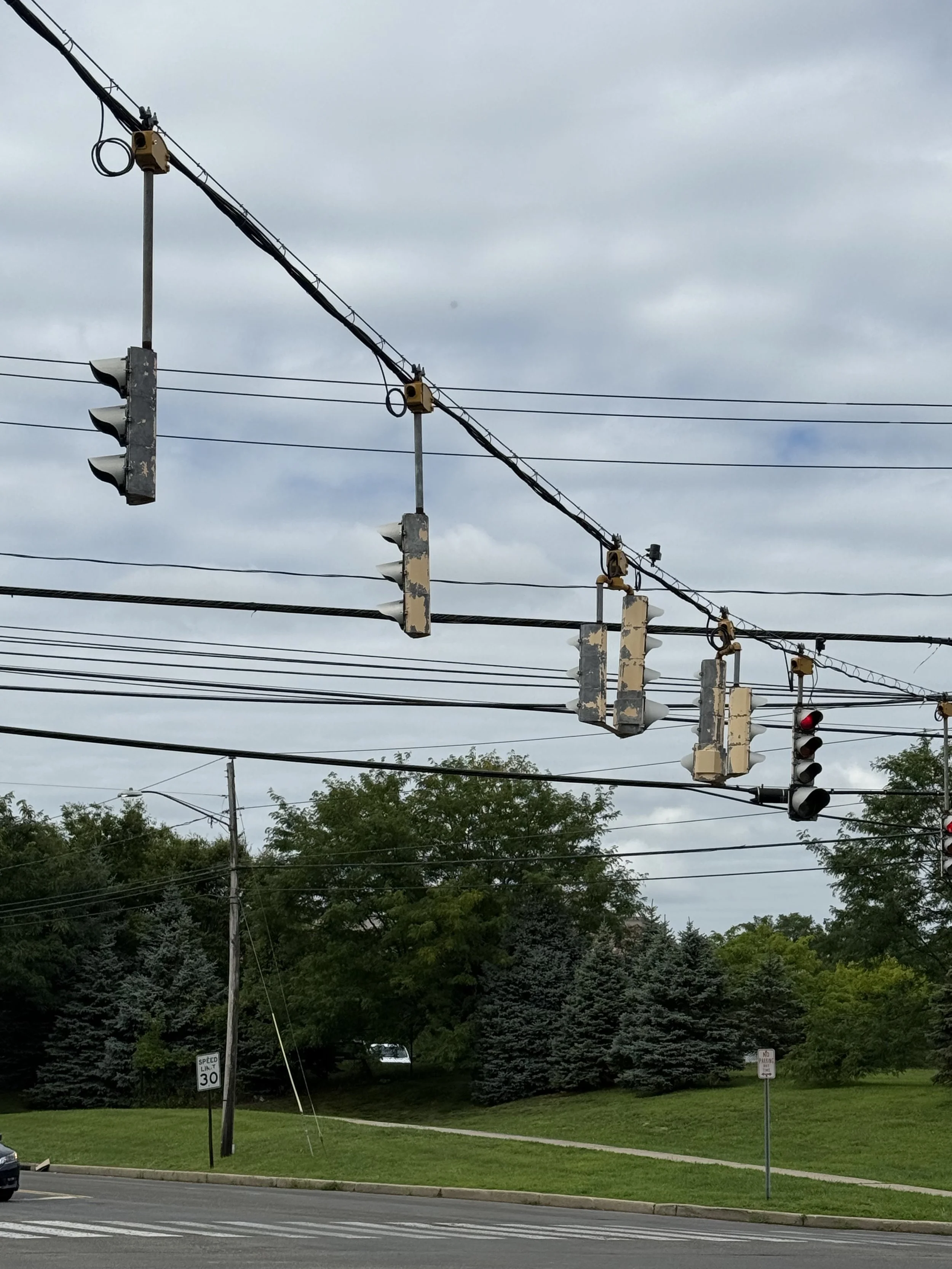
Aging traffic signals at the Shippan, Magee, Harbor Drive intersection.
How do roundabouts compare to traditional intersections in terms of maintenance costs?
The existing set of traffic lights and signal control infrastructure at the intersection is approaching the end of its useful life. Replacing the existing overhead signal lights with the newer, larger ‘mast arm’ fixtures and making required upgrades to the signal infrastructure are anticipated to cost upwards of one million dollars.
Roundabouts often require less maintenance than traditional intersections with traffic signals or stop signs since they have fewer moving parts and less infrastructure to maintain. This can result in long-term cost savings for the community.
While roundabouts may be expensive to construct, they do cost less than the average cost of a single fatal car crash (considering lost earnings, lost household production, property damage, medical costs, and other factors). Also, we remind you that the cost of the construction will be largely borne by a State grant.
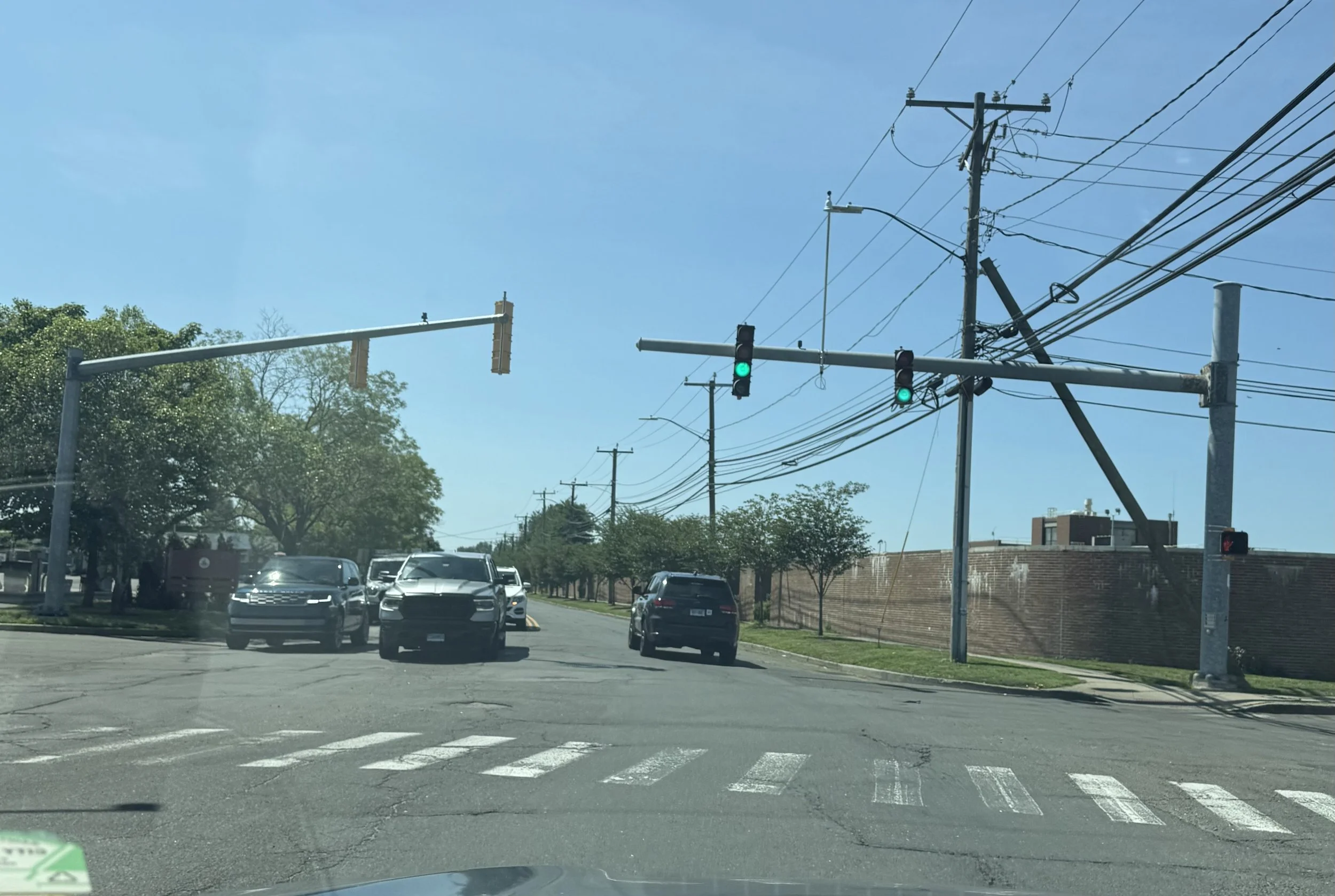
Mast Arm mounted traffic signals. Intersection of Pumping Station Rd. & Magee Ave.
Why do some people dislike roundabouts?
Some people might not like roundabouts because they're different from what they're used to, and change can be hard. Some drivers might feel unsure about how to navigate roundabouts, which can make them nervous. However, with a bit of practice, most people find roundabouts easy to use and appreciate their benefits.
A 2007 Transportation Research Record (TRR) study of six communities where stop signs or traffic signals were replaced with roundabouts found the proportion of drivers in favor of roundabouts ranged from 22% to 44% before construction compared with 48% to 67% soon after roundabouts were built and 57% to 87% after roundabouts were in place for at least 1 year. More information on the study can be found here: https://www.iihs.org/topics/bibliography/ref/1865
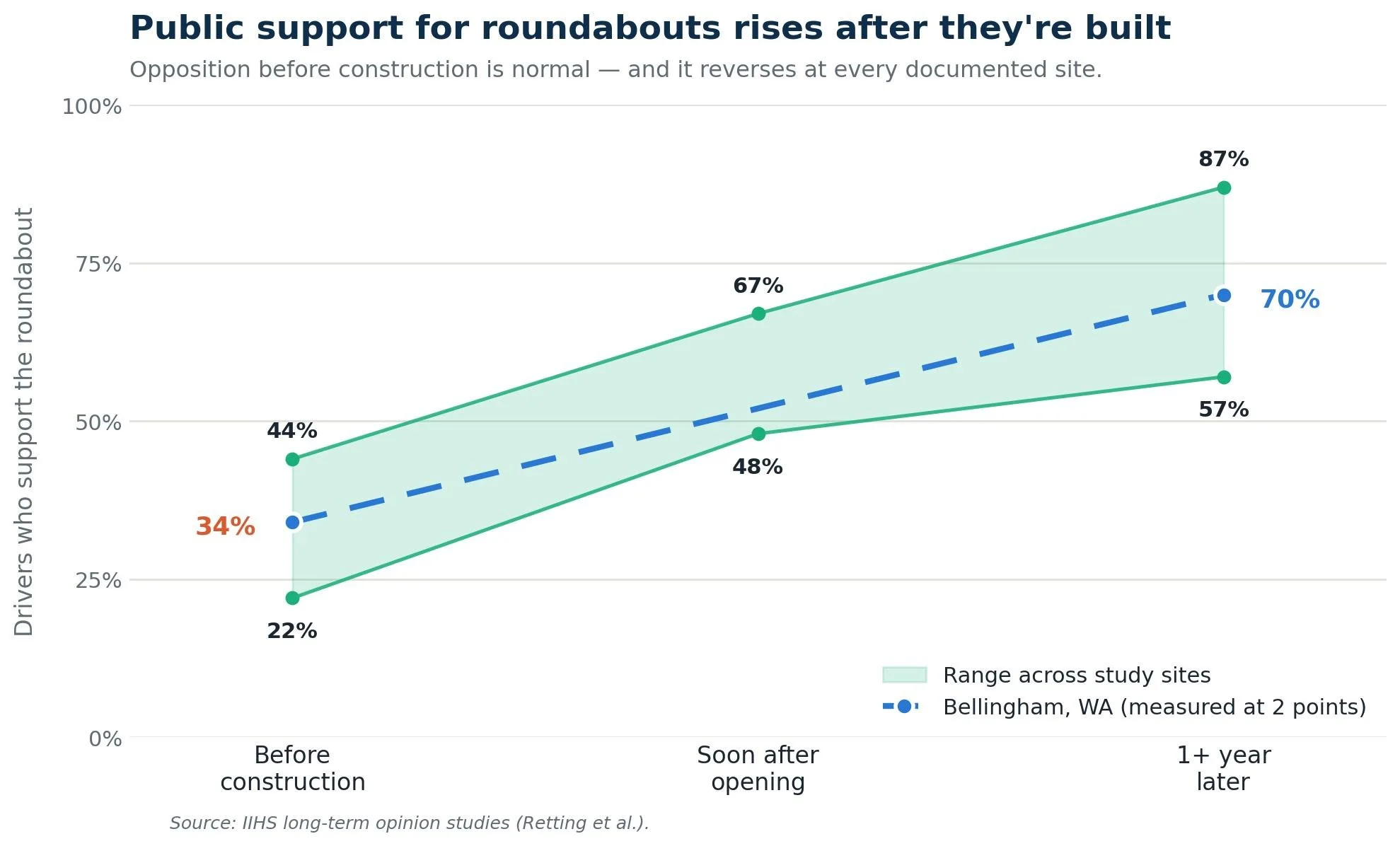
Community acceptance rises from skeptical to highly favorable after roundabouts are installed.